French Sûreté
An Officer and a SpyThe French Sûreté appears in the account as a police service whose agents and technical staff supplied practical capabilities to the army’s Statistical Section. Its role ranged from monitoring the family of Alfred Dreyfus to arranging covert access and surveillance near the German Embassy in Paris. The service did not replace military intelligence: it furnished personnel, equipment, and specialist methods to investigations directed from within the army, creating a working network that crossed institutional boundaries.
Identity and Institutional Role
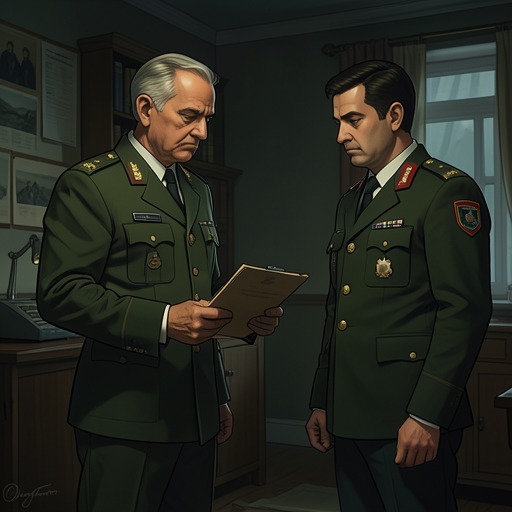
The narrative identifies François Guénée as an agent of the Sûreté and describes him as having been assigned to monitor the Dreyfus family under instructions from Colonel Sandherr. Guénée’s briefing takes place in Georges Picquart’s office, where he and Major Henry each bring a file. His report focuses first on Mathieu Dreyfus, whom he describes as having moved from Mulhouse to Paris to organize support for his brother. The episode establishes the Sûreté as a source of police surveillance for an investigation led by military officers, while also showing how reports and personal information moved through files and face-to-face briefings.
The service’s reach was not limited to watching the Dreyfus family. In March 1894, Guénée met the Spanish military attaché, the marquis de Val Carlos, on behalf of the Statistical Section. Val Carlos relayed a warning that a French officer on the General Staff was supplying information to foreign military attachés. Guénée thus served as an intermediary between a military intelligence organization and one of its informants. The account later describes another Sûreté agent, Desvernine, and identifies Louis Tomps as a Sûreté officer assigned to support a mission involving Richard Cuers. Together these examples show a service whose personnel could be tasked with surveillance, liaison, and operational support, depending on what the military investigation required.
Agents and Intelligence Work
The Sûreté’s contribution depended on individuals rather than an impersonal apparatus. Guénée delivered information about the Dreyfus family; Desvernine helped plan and execute a surveillance operation; and Tomps was selected as a reliable backup for a meeting abroad. Tomps was useful in part because he knew Cuers from earlier days in Paris and spoke good German. Picquart proposed assigning him to the mission so that the team could check that Cuers arrived alone and that the meeting was not a trap. The plan illustrates the importance of language skills, prior acquaintance, and precautions in work that connected French officers with foreign informants.
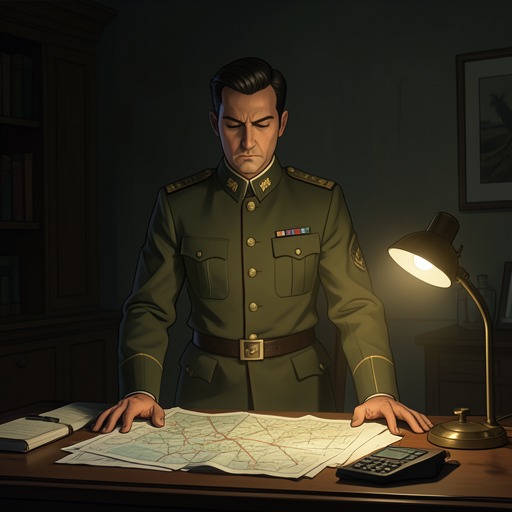
The agency also supplied technical capacity. When Picquart opened an active case under the code name Operation Benefactor, Desvernine visited the apartment rented opposite the German Embassy in Paris. A delivery van brought sealed cases containing optical and photographic equipment and the chemicals needed for a darkroom; the men carrying them upstairs came from the Sûreté’s technical department. The operation therefore joined field agents to specialized technical staff and equipment, with Picquart directing the investigation from the military side.
Covert Surveillance Opposite the Embassy
The rented apartment at 101 Rue de Lille faced the German premises at 78 Hôtel de Beauharnais. Picquart inspected it in civilian clothes, and the account places the operation within immediate reach of the embassy. To listen inside the German building, Desvernine and his colleagues worked through the chimney flues, fitting tubes that could carry the sense of nearby conversations to the apartment. The work required repeated pauses and careful handling because the occupants of the building might notice noises or soot. The account presents these risks as practical constraints on an operation that relied on patience as much as equipment.
Desvernine also brought Picquart a leather tool roll of lock-picking instruments made for the Sûreté by a master locksmith. The specialized picks and rakes offered a possible means of entering the Germans’ premises, but Picquart was troubled by the prospect of an agent being caught burglarizing property rented by the German mission. Rather than treating the tools as proof that entry took place, the account shows them as one proposed method whose risks had to be weighed. A different route emerged in May: a chimney sweep known to Desvernine was admitted to the ground-floor apartment and used the pretext of cleaning the flues to install both listening tubes. A German resident even tipped him as he left. The episode turns technical surveillance into a carefully staged act of ordinary service work.
Reach, Limits, and Significance
The operation’s usefulness was qualified. Picquart was told that the tubes worked best when a speaker was near a fireplace and could convey the sense of a conversation, rather than guaranteeing a complete or exact record. Their installation also strained the undercover arrangement: Ducasse, the occupant of the rented apartment, faced questions from neighbors about the noises and his activities, and the slow work took a toll on him. The account makes clear that surveillance depended on maintaining cover, controlling access, and accepting imperfect information.
The Sûreté’s involvement also shows how police expertise could be mobilized for military and diplomatic purposes without erasing the distinction between the institutions. Its agents worked on behalf of the Statistical Section, while its technical department supplied equipment and specialist tools. The resulting network linked military officers, police operatives, informants, and undercover personnel. That network could gather information across family, diplomatic, and foreign-intelligence settings, but its operations remained vulnerable to human error, exposure, and uncertainty. The French Sûreté’s significance in the narrative lies in this practical, connective role: it made covert investigation possible, while the decisions about what to investigate and how to use the resulting information remained entangled with the military chain of command.